

2219
How can I speak of uprootedness? According to the dictionary, “uprooting” means to tear a plant out by its roots, but it also means to entirely extinguish or extirpate a passion, a habit, or a vice.
Many of us migrate out of a need for change, for opportunities, or simply because we have no other option. From a distance, I have witnessed, like so many Venezuelans, the changes in our country… we all know, in one way or another, the situation in Venezuela; however — and this is important — there is a collective voice that not only bears witness to the abrupt changes in the country and in Venezuelan society, but also gives voice to its crisis, its discontent, its uprootedness.
2,219 kilometers separate Venezuela and Colombia, but, in the same way, 2,219 kilometers unite them. That is the length of the shared border — a place of encounters, dialogues, blends, exchanges, and multiple conflicts. This place, like every place in both countries, shares three essential colors: yellow, blue, and red, the colors of both national flags. I like to think that it is from these three primary colors that all others can be created. They are, then, the foundation for shaping a more complex reality.
For seven years, while living in Bogotá, Colombia, I worked on this project, which came to be called 2219. It is a project in which I reflect on the physical and emotional journey involved, for many, in fleeing one’s country of origin and being exposed to living between two realities: the one left behind — the affections, the belongings, the flavors, the smells — and the place of “destination,” a new space.
The project is made up of portraits and landscapes, both idyllic and liminal — charged with diverse political, historical, and social content. Over the seven years of the project, my photographic archive gradually became raw material to be torn apart, transformed, and pieced back together, fragment by fragment, in a way that represented rupture, unease, and, of course, the binational condition. Collage became present as a feeling of rupture, but also as repair — as a starting from zero


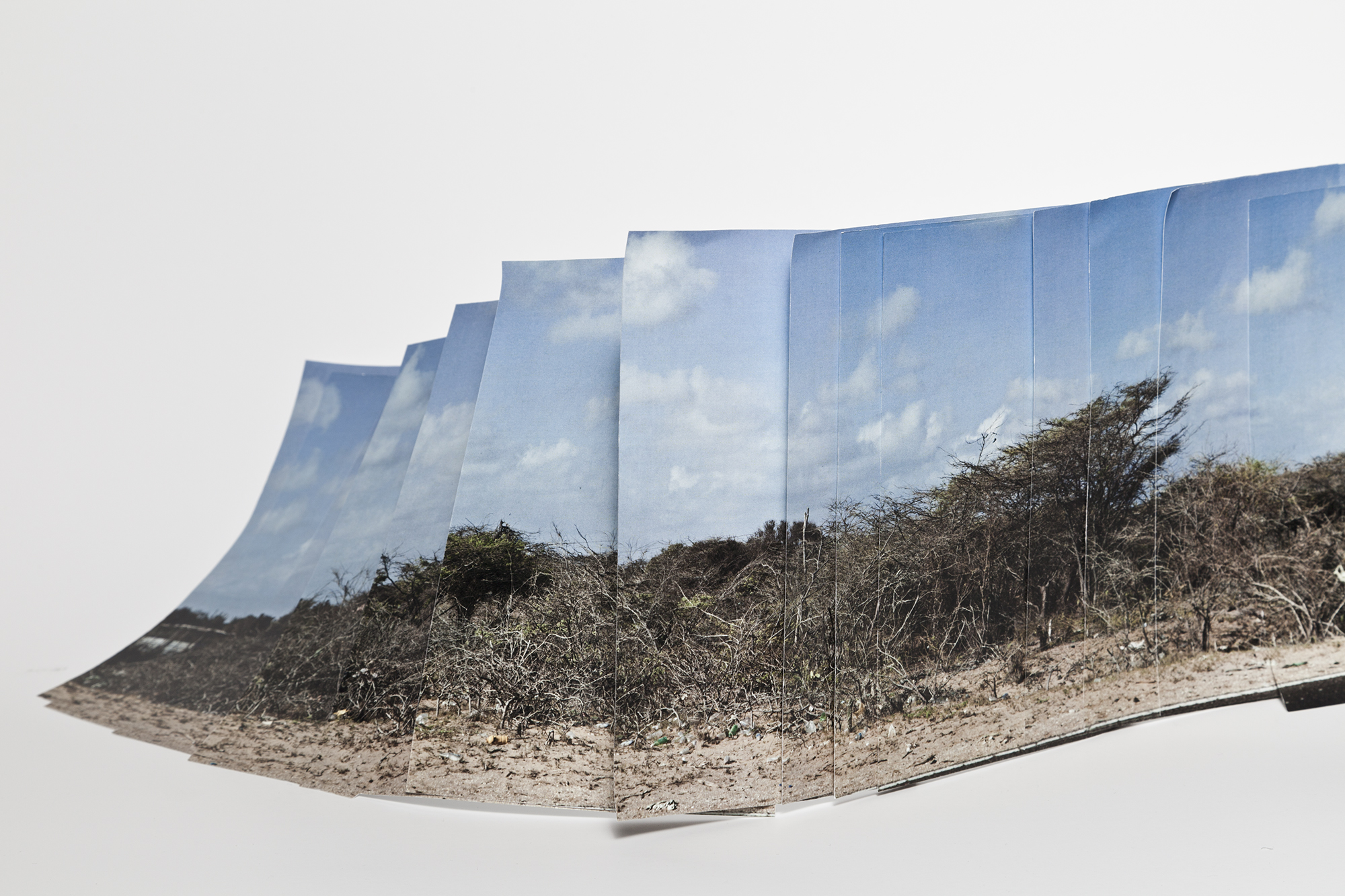
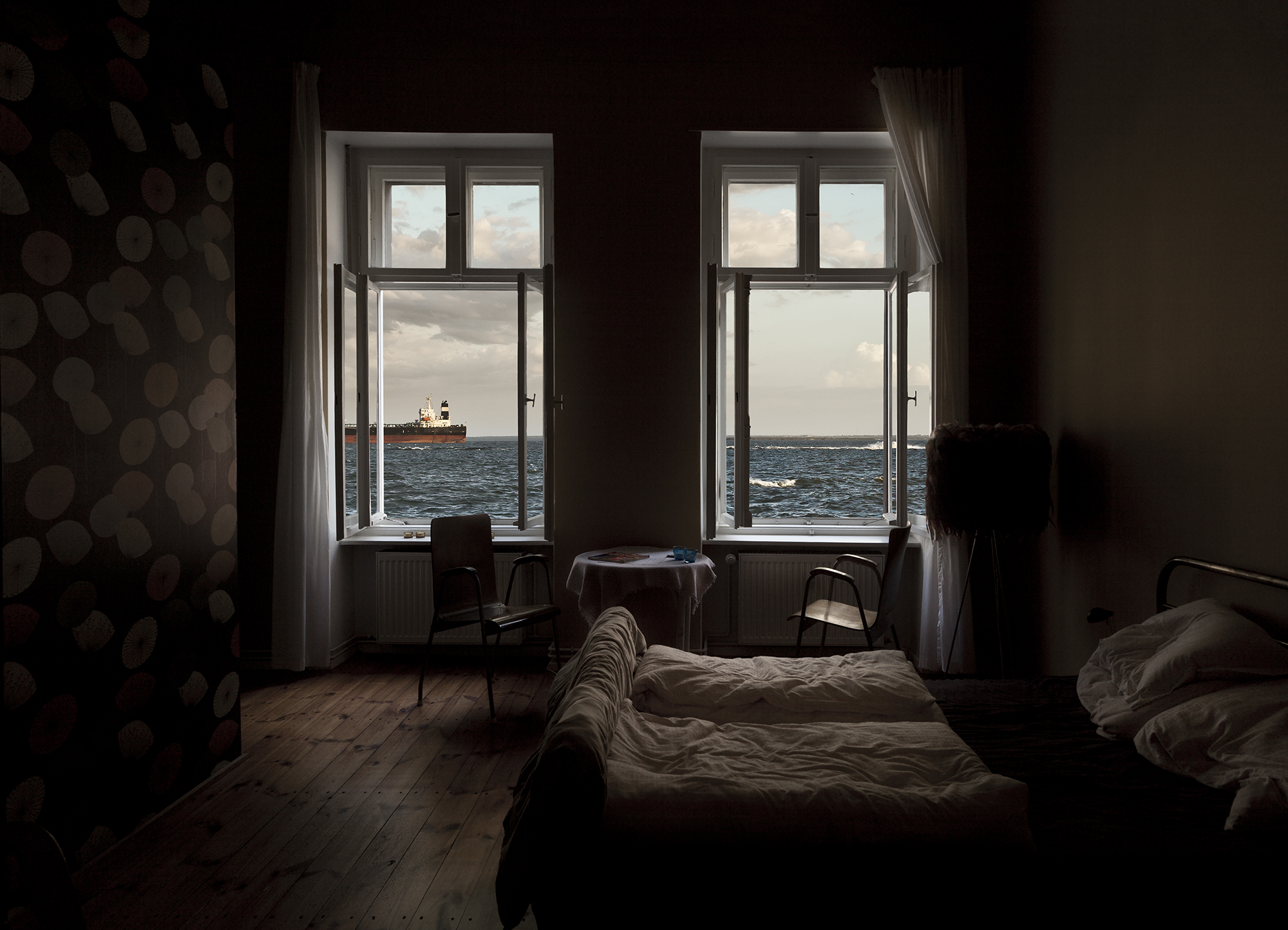
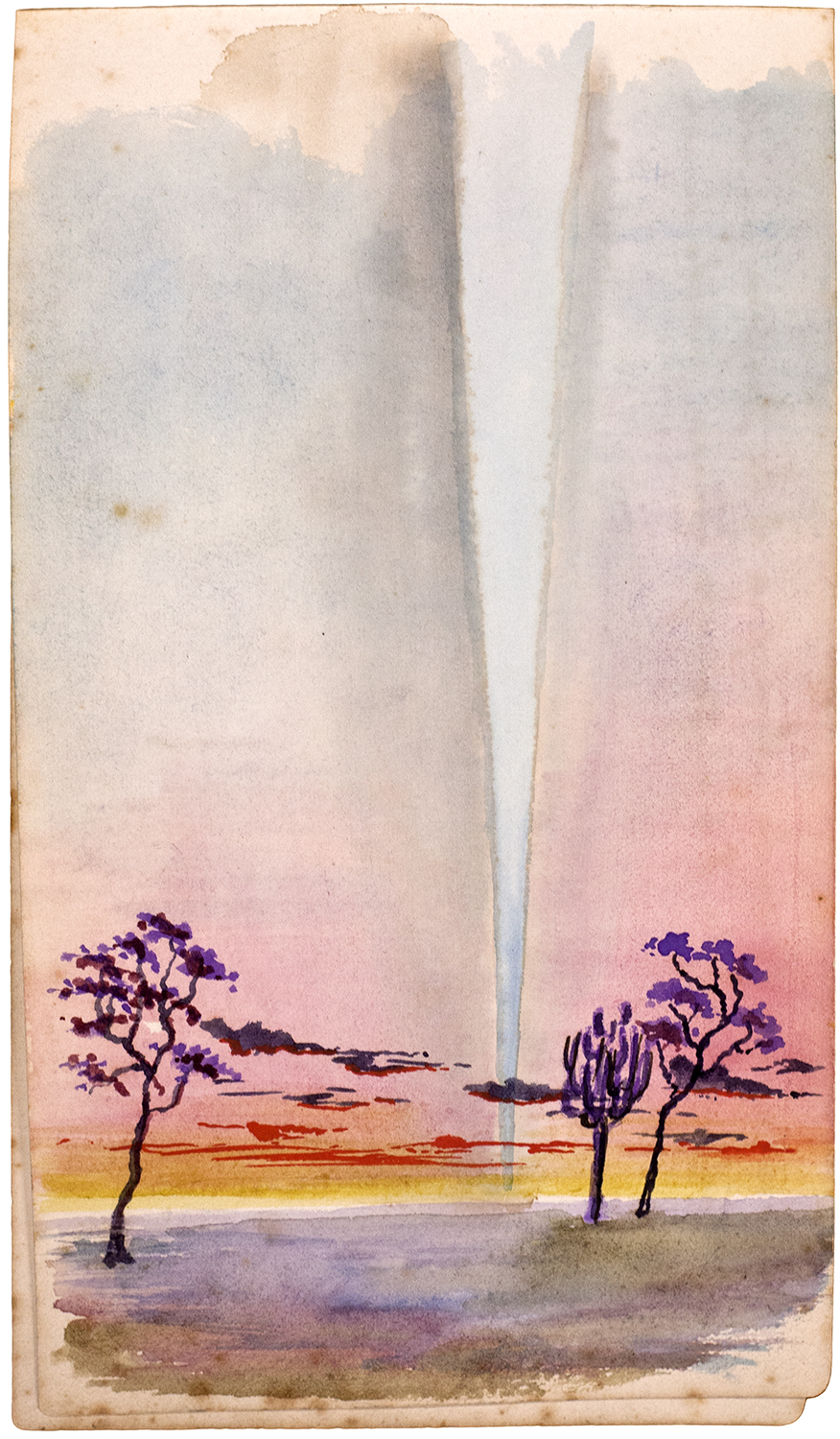


In late 2018, 2219 was published as a photobook after being selected in a Latin American Photobook competition organized by the Center of Photography in Montevideo, Uruguay
The photobook consists of three booklets, each with its own narrative and significance.
The first booklet, yellow in color, features a star on its cover, symbolizing the alterations made to Venezuela’s patriotic symbols under the current regime. Designed as an accordion, it evokes the idea of an endless journey toward an uncertain future. Through its pages, we traverse sterile landscapes along the northern border and follow the central corridor, historically the most active route, which offers a contemplative and bucolic view of the region.
The second booklet, blue in color, depicts a halted horse with its head turned backward—a representation of the horse from Venezuela’s national coat of arms as it appeared before 2006. This section immerses us in the homes of Venezuelan migrants in Colombia. The portraits capture their lingering grief for what they left behind: their traditions, loved ones, and sense of belonging.
Finally, the third booklet, red in color, showcases an untamed and free horse, the one that replaced the previous design in Venezuela’s coat of arms, symbolizing a country that many Venezuelans no longer recognize. Here, we witness the stories of fractured families, broken individuals, and fragmented lives.


